Gutters are easy to ignore. They sit at the edge of the roof, out of sight and out of mind, until something goes wrong. But a failing gutter system can quietly cause serious damage to your fascia, walls, foundations and interior long before you notice a leak inside the house.
In West Auckland, where heavy rain, bush debris and damp conditions put constant pressure on guttering, spotting problems early is especially important. This guide covers the most common warning signs, what each one means and how to decide whether you need a simple repair or a full replacement.
Why Catching Gutter Problems Early Matters
Gutters have one job: to collect rainwater from the roof and carry it safely away from the house. When they fail, that water goes somewhere else, usually down walls, into soffits or pooling around the foundation.
Small problems such as a loose bracket or a weeping joint are inexpensive to fix. Left alone, they can lead to rotten fascia boards, damaged roofing edges, stained cladding, damp ceilings and even structural movement. The difference between a minor repair and a major renovation is often just a few wet seasons.
A quick inspection twice a year, ideally after autumn leaf fall and after winter, is the best way to catch trouble early. Here is what to look for.
1. Water Overflowing During Rain
Stand outside during a heavy downpour and watch your gutters. Water should flow along the channel and into the downpipes. If it spills over the front edge, drips from the back or pours out at corners, something is wrong.
Overflow usually means a blockage, but it can also point to a gutter that is too small for the roof area, has lost its fall or has sagged out of alignment. If cleaning the gutters does not solve it, the problem is structural, and you may need adjustment, repair or a larger profile.
2. Visible Rust or Corrosion
Rust is one of the clearest signs that steel gutters are reaching the end of their life. Look for orange or brown staining, flaking paint, bubbling coating and small holes along the bottom of the gutter.
A few isolated rust spots on an otherwise sound gutter may be treated and repaired. But when rust appears along most of the run, or the metal is thin enough to push through with a finger, replacement is usually the sensible choice. Coastal homes near Piha and Muriwai tend to see corrosion sooner because of salt exposure.
3. Cracks, Splits and Holes
Cracks can appear in both metal and plastic gutters. In PVC they often result from UV damage, age or impact, such as a ladder strike or a fallen branch. In steel, splits can occur at seams and corners where the metal has fatigued or corroded.
Small holes and hairline cracks can sometimes be sealed, but sealant is a temporary fix. If you find several cracks or they keep returning, the material is deteriorating and a section or the full system should be replaced.
4. Sagging or Pulling Away From the House
A healthy gutter sits firmly against the fascia with a gentle, consistent slope toward the downpipes. If yours is bowed, drooping in the middle or visibly detached from the roofline, it is not draining properly.
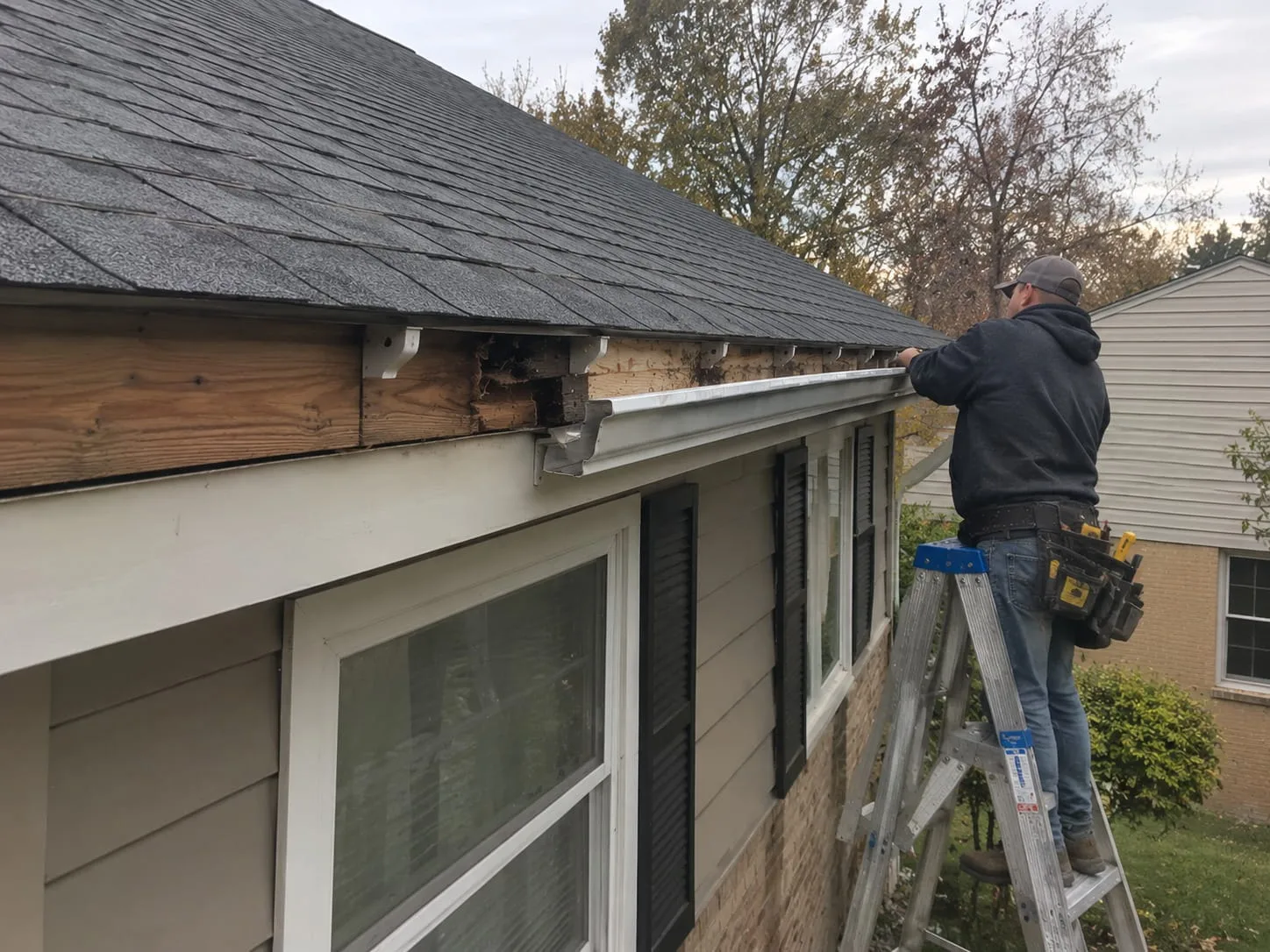
Common causes include loose or missing brackets, rotten fascia boards that can no longer hold fixings, and the weight of wet debris or standing water. Sometimes re-fixing and adding brackets solves the problem. If the fascia is soft or the gutter is badly bent, repairs may need to include timber replacement or a new gutter run.
5. Gutters That Hold Standing Water
After rain stops, gutters should drain completely within a short time. Persistent puddles, green sludge or mosquito larvae mean water is not flowing to the outlet.
This is often caused by incorrect fall, which can be the result of poor original installation or later settling and sagging. Standing water speeds up rust and adds heavy weight to the system. Re-aligning the gutter can fix mild cases, but gutters that have been poorly installed for years may be better replaced.
6. Leaking Joints and Seams
Look for drips, wet streaks or staining along joins, corners and end caps, especially during rain. Sealant at joints breaks down over time, and steel seams can open as the metal expands and contracts.
Resealing is a reasonable repair for one or two weeping joints. When joints are leaking all along the run, it signals widespread ageing, and replacing with continuous gutters, which have far fewer joins, is often the more reliable solution.
7. Peeling Paint and Stains on Fascia, Soffits or Walls
Water damage often shows itself on the house rather than the gutter. Peeling paint on fascia boards, dark streaks on cladding, green algae below the gutter line and stained or soft soffits are all signs that water is escaping.
Press gently on the fascia with a screwdriver. If the timber is soft or crumbles, rot has set in. Rotten fascia needs to be repaired before gutters are refitted, so addressing the problem early can save considerable money.
8. Water Pooling Near the Foundation
Walk around your home after rain and look at the ground beside the walls. Puddles, soil erosion, washed-out garden beds or dampness near the base can mean gutters are overflowing or downpipes are discharging in the wrong place.
Over time, repeated saturation around the foundation can lead to soil movement, cracking and damp in subfloor areas. This is a particular concern on West Auckland’s clay and sloping sections. Check that downpipes are connected to the stormwater system or discharge well away from the house.
9. Mould, Damp Patches or Stains Inside the House
Sometimes the first sign of a gutter problem appears inside. Water stains on ceilings near external walls, damp patches, peeling wallpaper or a musty smell can all result from gutters leaking into the roof space or behind walls.
Internal box gutters, which are common on older West Auckland villas and bungalows, deserve special attention. These hidden gutters can fail without any visible warning outside, and leaks can run unseen into ceilings and framing. If you see interior stains, have a roofer inspect the gutters and roof edges promptly.
10. Plants, Moss or Birds Nesting in the Gutters
A small amount of green growth in a gutter indicates that soil, seeds and moisture have accumulated. It also means the gutter is not draining well. Birds, rodents and insects may take advantage of the shelter.
Cleaning will usually fix the immediate issue, but recurring growth suggests poor fall or heavy debris that your current setup cannot handle. Gutter guards, larger profiles or additional downpipes may help.
11. Loose, Missing or Rusted Brackets and Fixings
Brackets carry the weight of the gutter and everything in it. If you can see gaps between brackets and the gutter, bent supports, missing screws or rust around fixings, the system is under strain.
Replacing brackets is a simple repair, but it is only effective if the fascia behind them is sound. Where fixings keep pulling out of soft timber, the underlying fascia needs attention.
12. Age of Your Gutters
Even without visible problems, age matters. Many gutter systems have a working life of around 20 to 30 years, depending on the material, installation quality and environment. If yours are approaching or beyond that range and show any of the signs above, planning a replacement is usually wiser than continuing to patch them.
Repair or Replace? A Simple Guide
Use these pointers to decide your next step.
Repair is usually enough when:
- There are one or two isolated leaks or weeping joints.
- A few brackets are loose or missing.
- Rust is limited to small, surface-level spots.
- The gutter is sagging in one section due to fixings, not damaged material.
- The system is relatively young and otherwise sound.
Replacement is usually better when:
- Rust, cracking or leaks appear along most of the gutter run.
- The material is thin, brittle or corroded through.
- The fascia is rotten and needs replacing.
- Gutters repeatedly sag, overflow or leak after repairs.
- The system is near the end of its expected life.
- You are re-roofing or repainting and want to avoid paying for access twice.
If you are unsure, a professional inspection will tell you quickly whether repairs make sense, and a reputable roofer will give you honest advice rather than pushing a full replacement.
A Quick Self-Inspection Checklist
You do not need to climb a ladder to spot most problems. Walk around the house during or just after rain and look up at the roofline from the ground. Check for overflow, drips at joints, sagging sections and stained walls. Then look at the base of each downpipe to confirm water is leaving freely. Take photos of anything unusual, because they help a roofer assess the problem quickly and let you track whether it is getting worse from season to season.
What Happens If You Ignore the Signs?
Delaying gutter repairs rarely saves money. Water damage tends to spread, and each wet season makes it worse. Typical consequences include:
- Rotten fascias, soffits and rafter ends.
- Leaks into ceilings, insulation and wall cavities.
- Mould and poor indoor air quality.
- Stained, deteriorating exterior paint and cladding.
- Foundation movement and landscaping erosion.
- Larger repair bills and, in some cases, problems when selling the property.
Dealing with the cause early nearly always costs less than repairing the damage that follows.
Frequently Asked Questions
How do I know if my gutters are past repair? If rust, cracks or leaks affect much of the system, or the fascia behind them is rotten, replacement is generally more cost-effective than repeated repairs.
Can I repair gutters myself? Minor jobs such as clearing blockages or tightening brackets are possible for confident DIYers, but working at height is risky. Larger repairs are best left to professionals.
How often should gutters be inspected? At least twice a year, and after major storms.
Will a roofer repair just a section of my gutters? Yes, if the rest is sound. Your roofer can advise whether a partial repair will blend with the existing system.
Do leaking gutters affect my home’s value? Visible damage such as stained walls or rotten fascia can reduce buyer confidence, so addressing it before selling is usually worthwhile.
Book a Gutter Inspection
If you have spotted any of these warning signs, do not wait for the next storm to test your gutters. West Auckland Roofing provides gutter repair, replacement and installation across West Auckland, with honest advice on whether a repair or full replacement is the better option.
Get in touch for a free inspection and quote, and protect your home before small problems become expensive ones.