When it is time to replace your gutters, one of the first decisions you will face is the material. In New Zealand, the two most common choices are Colorsteel, a pre-painted steel, and PVC, a rigid plastic system. Both are widely used, both can perform well, and both have loyal supporters among installers and homeowners.
The right choice depends on your budget, your location, your roof and how long you plan to stay in the house. This guide compares Colorsteel and PVC gutters side by side, with a focus on the conditions West Auckland homes actually face: heavy rain, bush, shade, moisture and, in some suburbs, salt air.
Colorsteel and PVC at a Glance
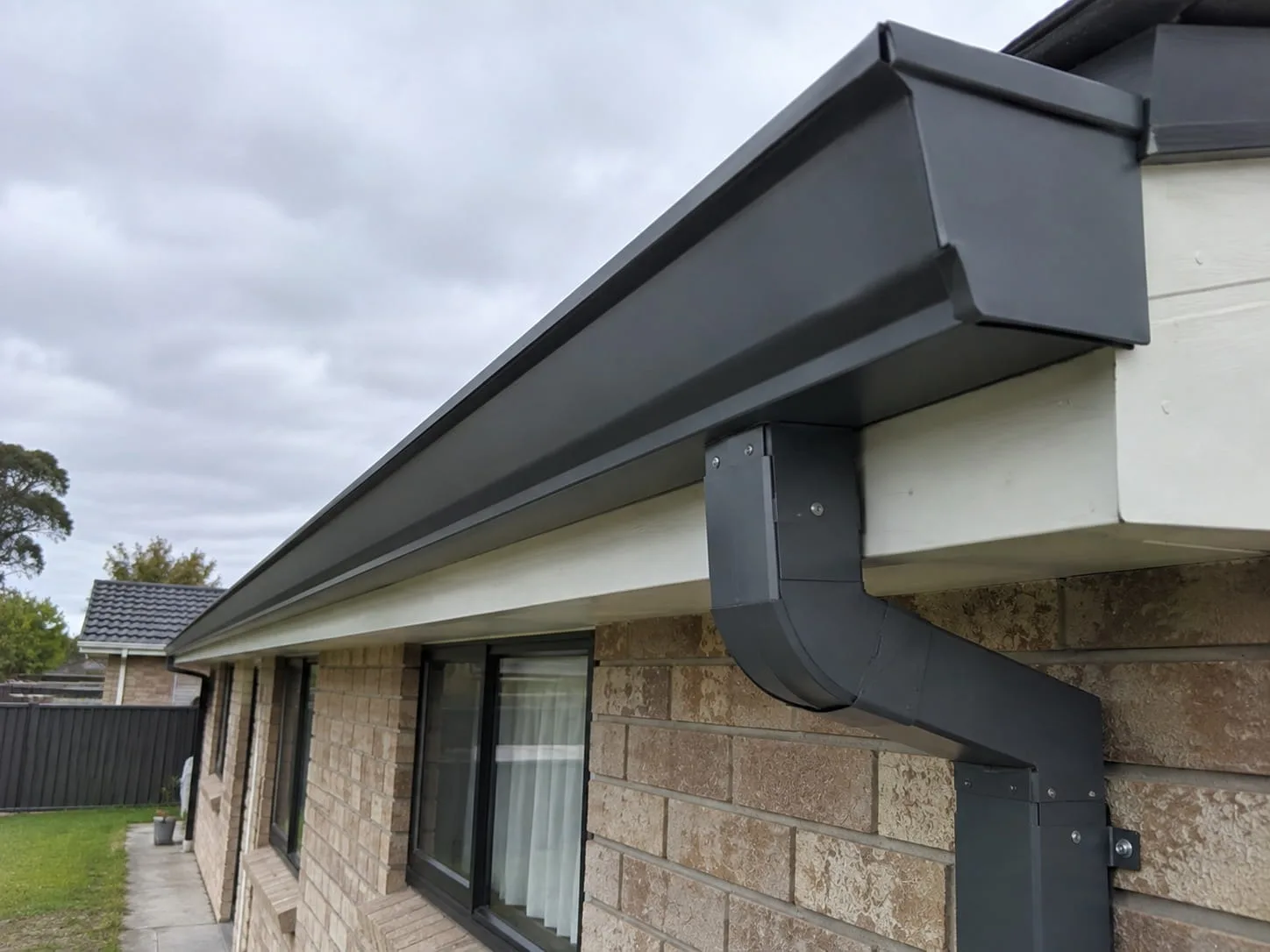
Colorsteel gutters are made from steel that is galvanised or zinc-aluminium coated and then pre-painted. They are roll-formed into profiles that can be produced in long continuous lengths, which reduces the number of joins. They come in a wide range of colours that can match your roof and fascia.
PVC gutters are moulded from rigid uPVC, with popular systems such as Marley widely used across New Zealand. They are assembled from sections that clip or glue together, with fittings for corners, outlets and downpipes. They do not rust and are available in a smaller range of standard colours, typically white, grey and black tones.
Both systems can handle normal rainfall when correctly sized and installed. The real differences appear in cost, durability, appearance, maintenance and how each material copes with local conditions.
Cost Comparison
PVC is generally the more affordable option. Supply and installation costs sit at the lower end of the market, which makes it attractive for tight budgets, rental properties and straightforward re-guttering jobs.
Colorsteel typically costs more, reflecting the heavier material, longer lengths and fabrication involved. The price gap varies between installers and projects, and it can narrow once you factor in the number of joins, the profile you choose and the quality of installation.
It helps to think about cost over time rather than only at the start. A cheaper system that needs replacing sooner can end up costing more than a more expensive one that lasts. Conversely, there is little point paying extra for a feature your home does not need. Ask for quotes on both materials so you can see the actual difference for your roofline.
Durability and Lifespan
Colorsteel. Well-installed Colorsteel gutters can last for decades. The coating protects the steel from rust, and the material is strong enough to resist bending, impact and the weight of debris. Lifespan depends heavily on environment and maintenance. In sheltered suburbs, performance is excellent, whereas in harsher coastal settings the coating needs regular rinsing to remove salt.
PVC. PVC does not rust or corrode, which is a major advantage in damp, humid conditions. However, long-term exposure to UV light can make it brittle over time, particularly on sunny faces of the house. It can also crack from impact, such as a ladder strike, a falling branch or hail. Joints rely on seals and fixings that can fail as the material expands and contracts.
In short, steel tends to be tougher and longer-lived in structure, while PVC resists corrosion but can be more fragile and sensitive to sun and temperature.
Performance in West Auckland Conditions
West Auckland is wetter than much of the city, and the western ranges receive heavy rainfall that can arrive in intense bursts. Gutters here need to carry large volumes of water without overflowing, and they need to resist the constant dampness that comes with shaded bush sections.
Heavy rain. Both materials can handle it, provided the profile is large enough and downpipes are adequately spaced. Continuous Colorsteel runs have fewer joins, which means fewer places for leaks to develop under sustained load.
Shade, moss and dampness. PVC does not rust, so it copes well with the damp conditions of Titirangi, Laingholm and Waiatarua. Colorsteel is also well suited, but any scratches or damaged coating should be treated promptly, and gutters should be kept clear of wet debris that holds moisture against the metal.
Coastal exposure. At Piha, Karekare, Bethells Beach and Muriwai, salt spray is the main concern. Colorsteel manufacturers set specific conditions for coastal installations, and some warranties depend on regular washing. PVC is unaffected by salt, but it still needs to cope with strong wind and UV. For severe marine exposure, aluminium is often worth considering as a third option.
Wind and storm debris. Steel’s rigidity helps it withstand wind and branch impact. PVC systems are more likely to crack or shift if struck.
Appearance and Colour Options
Gutters are a visible part of your home’s exterior, so looks matter.
Colorsteel offers a wide palette that can be matched to your roof, fascia or cladding for a cohesive, high-quality appearance. Continuous lengths also look cleaner, with fewer visible joins. This is a significant benefit on contemporary homes and in higher-value suburbs where presentation is important.
PVC is available in a more limited range of colours, and while it looks perfectly neat on many homes, the joints and fittings are more visible. White PVC can show dirt and mould more easily, while darker colours may fade slightly in strong sun over time.
If your home has a distinctive colour scheme or architectural style, steel generally gives more flexibility to get it right.
Installation Differences
Colorsteel is often roll-formed on site to the exact length required, so a single run can span the whole side of a house. This reduces joints, which are the most common leak points, but it requires specialised equipment and skilled installers. Poor installation, such as incorrect fall, spacing or fixing, will undermine the benefits.
PVC is installed in sections, which makes it quick and relatively simple. It suits homes with many corners and offsets, and it is easy to modify or extend later. The downside is more joins, and each one is a potential weak point if sealants age or the system flexes.
Whichever material you choose, correct fall, adequate bracket spacing and properly sized downpipes are essential. A top-quality gutter will still fail if the installation is rushed.
Maintenance Requirements
Both materials are low maintenance, but neither is maintenance-free.
Colorsteel should be cleaned regularly to remove leaves and sludge, which can hold moisture against the surface. In coastal areas, washing the exterior, particularly areas not rinsed by rain, helps preserve the coating. Chips or scratches should be touched up to prevent rust from starting.
PVC needs the same regular clearing of debris. It can be washed with mild detergent to remove mould or staining. Check joints and brackets periodically, as movement from heat can loosen fixings.
In both cases, regular cleaning and inspection are the best way to extend the life of your gutters, and that matters more than the material itself.
Environmental and Practical Considerations
Steel is recyclable, and many old Colorsteel gutters can be taken to scrap metal facilities. PVC is also recyclable in principle, but recycling options for rigid PVC building products vary. If environmental impact matters to you, discuss disposal and recycling with your installer.
Noise is another practical factor. PVC is quieter in heavy rain, which some homeowners prefer, particularly over bedrooms. Steel can be slightly louder during downpours, although good installation and fixing reduce this.
Weight also differs. PVC is very light, but steel is light enough for most roofs and fascia boards, provided the timber is sound.
Quick Comparison Table
| Factor | Colorsteel | PVC |
|---|---|---|
| Upfront cost | Higher | Lower |
| Rust resistance | Coated, needs care in coastal areas | Does not rust |
| Strength | Very strong, impact resistant | Can crack or become brittle |
| Joints | Fewer, with continuous runs | More joins and fittings |
| Colours | Wide range | Limited range |
| Noise in rain | Slightly louder | Quieter |
| Coastal suitability | Good with maintenance | Unaffected by salt |
| Best for | Long-term value, premium look | Budget projects, damp settings |
Which Is Best for Your Home?
There is no single winner, but these guidelines can help you decide.
Choose Colorsteel if you want a premium look, long-term durability and seamless runs, you plan to stay in the home for many years or you need to match a specific colour scheme. It suits most West Auckland homes, especially those with large roofs, heavy rainfall exposure and higher presentation standards.
Choose PVC if you need to keep upfront costs down, your property is a rental or a short-term hold or your gutters are exposed to constant dampness where rust would be a concern. It is also a sensible choice for simple rooflines and outbuildings.
Consider aluminium if you live right on the coast and want rust-proof performance with a clean finish.
Whichever you choose, the quality of the installation matters as much as the material. Ask your roofer about gutter profile, fall, bracket spacing and downpipe placement, not only the product name.
Questions to Ask Your Installer
Before you commit, put these questions to your roofer.
- Which profile and size do you recommend for my roof area and local rainfall?
- How many joins will there be, and how are they sealed?
- What bracket spacing do you use?
- How many downpipes are included, and where will they go?
- What warranty applies to the materials and to your workmanship?
- Does the quote include removal of the old gutters and any fascia repairs?
- Are there any coastal or environmental conditions that affect the warranty?
Clear answers to these questions are a good sign that the installer knows their work.
Frequently Asked Questions
Is Colorsteel better than PVC for gutters? Colorsteel is generally stronger and offers a more premium finish, while PVC is cheaper and resists corrosion. Which is better depends on your priorities and location.
Do PVC gutters crack? They can, particularly with age, UV exposure or impact. Good installation and proper support reduce the risk.
Will Colorsteel gutters rust? The coating is designed to prevent rust, but scratches, trapped debris and salt exposure can cause problems if not maintained.
Can I mix PVC gutters with a Colorsteel roof? Yes. Many homes do so, although steel gutters give a better colour match.
How long do gutters last? With proper care, both materials commonly last for decades, but conditions and maintenance make a big difference.
Get Expert Advice for Your Home
Choosing between Colorsteel and PVC is easier when you have a professional assess your roof, your fascia and your property’s exposure. West Auckland Roofing installs and repairs gutters across the region and can quote both options so you can compare real numbers.
Contact the team for a free inspection and quote, and get gutters that suit your home, your budget and the West Auckland weather.